Wagah Border Tour
Tours & tickets

Hand-picked by our editors — only the best 5 evening ceremony experiences from 47 reviewed.

Open today 10:00–18:00
Attendance: Moderate — autumn shoulder season
Arrive by 15:30 to secure a seat for the Beating Retreat ceremony.
Free cancellation Instant confirmation Mobile voucher Verified partner Small group tours
Tickets

Choose your ticket

Verified partners for every tour, free cancellation where available, and instant confirmation on every booking.

Amritsar Heritage Day Tour: Sacred Sites & Border Ceremony 9 hr
Guided Experience

Amritsar Heritage Day Tour: Sacred Sites & Border Ceremony

4.9 (45)
€23
per person
Instant Mobile voucher Flexible — change up to 24h

Explore Sikhism's holiest shrine, witness a powerful independence memorial, and experience the electrifying Wagah flag-lowering ritual

Reserve
Amritsar Heritage & Wagah Border Ceremony Private Tour 9 hr
Luxury / Private

Amritsar Heritage & Wagah Border Ceremony Private Tour

5 (8)
$39
per person
Instant Mobile voucher Flexible — change up to 24h

Journey through sacred sites, partition history, and witness India's most dramatic flag ceremony

Reserve

Prices from verified partners. Availability updates in real time at checkout. Free cancellation policies apply where shown.

Highlights

What you'll see inside the attraction

The landmarks, rooms, and views travelers on this tour remember — all visible on a single visit.

International Border Gates

The massive iron gates separating India and Pakistan serve as the focal point for the flag-lowering ceremony.

Head to head

Wagah Border at Night vs Hussainiwala Border Ceremony: Choosing Your Border Experience

They complement each other; most visitors who do both call the Hussainiwala Border ceremony the more intimate, local experience, while the Wagah Border at night provides a larger, more intense atmosphere.

Feature Top pick Wagah Border Hussainiwala Border
Location
Ferozepur District
Crowd Size
Small (Local/Regional)
Atmosphere
Intimate/Cooperative
Travel Time from Amritsar
Approx. 2.5–3 hours
Ceremony Intensity
Moderate/Solemn
Accessibility
Moderate (Private transport recommended)

Verdict: For travelers seeking a historic, patriotic spectacle, our wagah border at night tours are unparalleled, whereas those preferring a quieter, more personal connection to the border region should consider a wagah border at night tour to Hussainiwala, though booking private wagah border at night tickets for seamless transit remains advisable.

How your ticket works

Book your ticket in 3 steps

  1. 01

    Book online

    Choose your ticket, select your date, and reserve in under two minutes. Secure checkout handled by our verified partner.

  2. 02

    Receive your mobile voucher

    Instant confirmation by email, with a mobile voucher you can save offline. No printing, no queuing at a collection desk.

  3. 03

    Show & enter

    Arrive at the entrance, show your voucher on your phone, and walk in. Most tickets include priority or skip-the-line access.

Plan your visit

Everything you need to know before you go

Practical details for your visit straight from our verified partners — hours, access, rules, and how to get there.

Open today · 10:00–18:00
Opening hours
10:00–18:00
Address
Attari, Amritsar, Punjab 143108, India
Accessibility
Dedicated seating for foreign tourists and accessible facilities available
Best arrival window
15:00–16:00
Security Note
Strict no-bag policy in the stadium area
Proximity
30 km from Amritsar city center
Mon
10:00–18:00
Tue
10:00–18:00
Wed
10:00–18:00
Thu
10:00–18:00
Fri
10:00–18:00
Sat
10:00–18:00
Sun
10:00–18:00
Location

Address
Attari, Amritsar, Punjab 143108, India
Security Note
Strict no-bag policy in the stadium area
Proximity
30 km from Amritsar city center

Dress code

Visitors are encouraged to wear modest clothing out of respect for the venue's patriotic and military significance. Comfortable footwear is highly recommended due to the walking distance from the parking area.

Bags & security

Strict security measures are in place. Large bags, backpacks, and purses are prohibited in the seating area, so visitors should plan to leave these items in their vehicle.

Photography

Photography is allowed in most areas of the Wagah border at night grounds, but do not photograph sensitive military installations or restricted zones. Ensure you keep your camera ready for the high-energy movements during the Beating Retreat.

Accessibility

The venue provides designated seating areas for foreign tourists, which are generally easier to access. Please inform security personnel upon arrival if you require assistance reaching the seating blocks.

What to bring

  • Valid photo ID
  • Passport
  • Sunscreen
  • Sunglasses
  • Small transparent bag
  • Comfortable walking shoes

Not allowed

  • Backpacks
  • Large handbags
  • Camera tripods
  • Drones
  • Alcohol
  • Tobacco products
  • Lighters
  • Sharp objects
  • Power banks
  • Water bottles (large)

Families & strollers

The atmosphere at the wagah border at night is loud and energetic, similar to a sporting event, which is engaging for children. Be aware that the crowds can be dense and noisy, so keep family members close at all times.

Food & drink

There are no significant food facilities inside the stadium, so it is advisable to eat in Amritsar before departing. Carry a small water bottle for hydration, as the walk from the gate to the stadium can be warm.

Around your visit

Everything else worth knowing

Best time to go, insider tips, nearby landmarks, and the cancellation fine print — flip through to skim what matters to you.

Cancellation policy

Flexible, no hidden fees.

Entry is free for all visitors with no tickets required, therefore no cancellation fees apply. Access is managed on a first-come, first-served basis.

About

The place, in context

The Beating Retreat ceremony at Attari unfolds each evening precisely thirty minutes before sunset, a synchronized drill choreographed by the Border Security Force of India and Pakistan Rangers since 1959. The flagpoles stand 67 metres apart, marking the Radcliffe Line that partitioned Punjab in 1947. What began as a utilitarian border-closing protocol has evolved into a theatrical display of military pageantry, drawing upward of 25,000 spectators on peak days. The soldiers execute high kicks, stomping marches, and gate-slamming manoeuvres in perfect mirror symmetry, their uniforms — saffron turbans on the Indian side, black on the Pakistani — visible from the concrete grandstands that rise in tiered rows on both sides of the border road. The grandstands open at ten in the morning, though the ceremony itself runs for forty-five minutes starting around 16:15 in winter months and 17:15 during summer, adjusted to match the sunset hour. Seating is allocated on a first-come basis; the front rows fill by mid-afternoon. The Indian side accommodates roughly 15,000 visitors in its main enclosure, with separate VIP galleries for dignitaries and a smaller section for foreign nationals. Loudspeakers pump patriotic songs across the arena, and vendors circulate selling tricolour flags and plastic horns. The atmosphere shifts from carnival to solemnity as the gate ceremony begins, soldiers from both nations lowering their respective flags in a synchronized countdown. The Wagah border crossing lies 32 kilometres west of Amritsar, reachable via Grand Trunk Road, a historic trade route that once connected Kabul to Calcutta. The site itself is spartan: a single white gate, red and green signal lights, and the iron border posts embedded in asphalt. No infrastructure exists beyond the grandstands and a security perimeter enforced by metal detectors and bag checks. Evening tour packages from Amritsar typically bundle the ceremony with afternoon visits to the Golden Temple, allowing travellers to witness both the Sikh holy site and the border ritual in a single circuit. The drive from the city centre takes forty minutes outside rush hour, though tour operators recommend departing by 15:00 to secure optimal seating. After the flags are lowered and the gates locked, the crowd disperses within minutes, the arena emptying as quickly as it filled.

"The flagpoles stand 67 metres apart, marking the Radcliffe Line that partitioned Punjab in 1947."
Your experience

What a tour day looks like

A step-by-step walkthrough of the visit — what you'll see, how long each stage takes, and the details that matter.

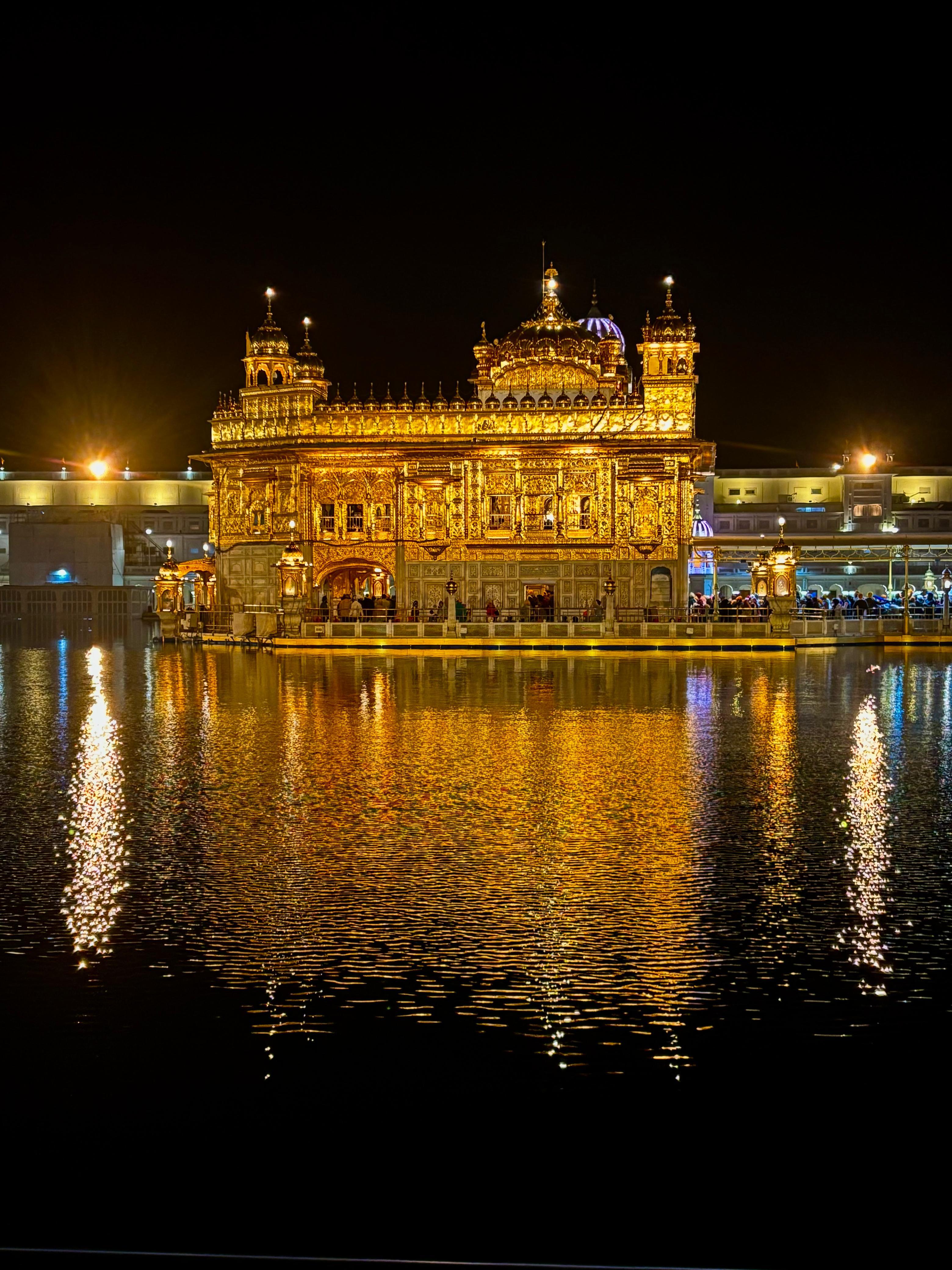
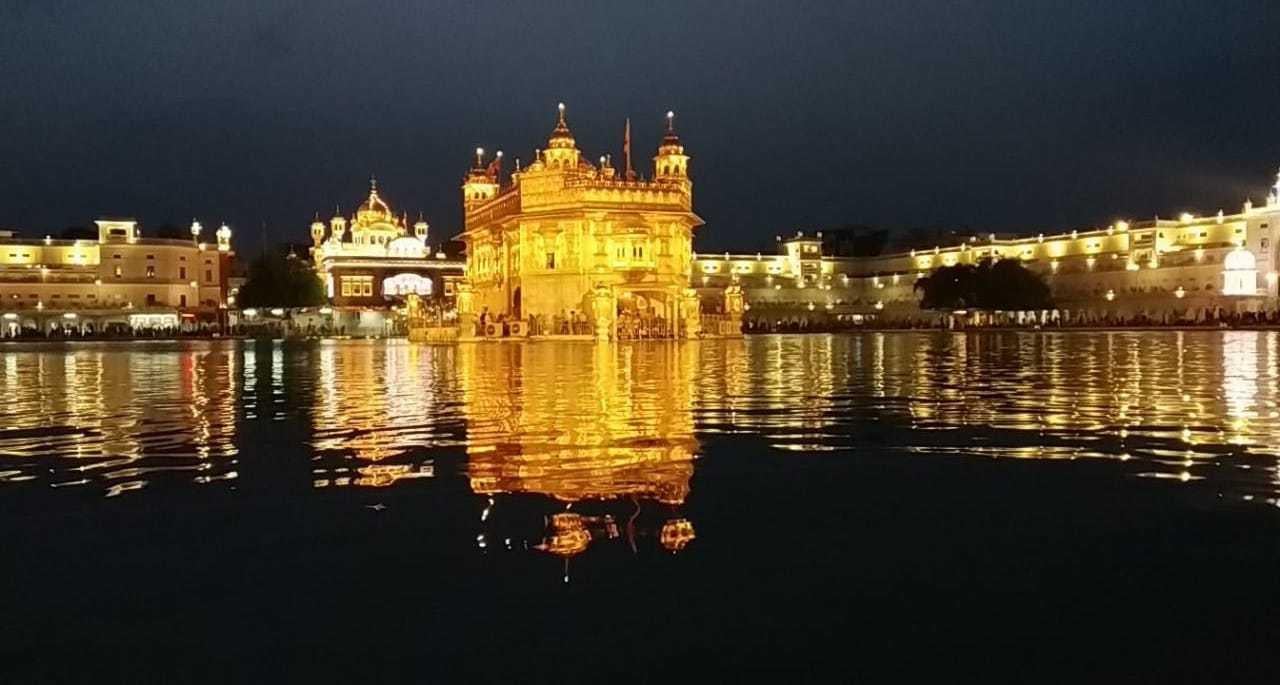
You depart Amritsar by mid-afternoon, the tour vehicle threading through Grand Trunk Road traffic as the city thins into farmland. At Attari, you pass through security cordons — bags screened, identification checked — before climbing the concrete grandstand tiers. The front rows are already dense with families waving paper flags, so you settle three rows back, sightlines clear to the white gate and the green-uniformed soldiers assembling in formation. By 16:00, the loudspeakers begin cycling patriotic anthems, and the crowd joins in refrains. A compere announces the ceremony's start, and the soldiers stride forward in exaggerated goose-step, boots striking asphalt in rhythmic percussion. Across the border, Pakistani Rangers mirror each movement, their black berets bobbing in sync. The gate swings open for a brief handshake protocol, then slams shut as both flags descend in tandem, folded with parade-ground precision. The entire sequence runs forty minutes, ending with a bugle call and final salute. You exit through the west gate as dusk settles, the border road emptying fast. Most evening tours loop back through Amritsar for a nighttime stop at the Golden Temple, its marble causeway illuminated over the Amrit Sarovar. You arrive there by 19:30, the pooled water reflecting the Harmandir Sahib's gold leaf in doubled symmetry.

Frequently asked

Frequently asked questions about wagah border at night tours

Are there tickets required for a wagah border at night tour?

No, entry is free for all visitors and no tickets are required for any wagah border at night tour.

Is the Wagah border open at night?

The border gates close for the night following the ceremony, which is the primary reason visitors attend the wagah border at night event.

What is the best arrival time for a wagah border at night visit?

We recommend arriving between 15:00–16:00 to secure a seat, as they are provided on a first-come, first-served basis.

Are cameras allowed at the wagah border at night?

Yes, photography is generally permitted during the wagah border at night parade, but restricted near sensitive military zones.

What should I avoid bringing to the wagah border at night?

Avoid bringing bags, as strict security at the wagah border at night prohibits them inside the seating area.

Is there a dress code for the wagah border at night?

There is no strict dress code, but modest attire is recommended for this prominent Amritsar landmark.

Can I use my phone at the wagah border at night?

Mobile phone service is often unavailable due to jammers; focus on the wagah border at night experience instead.

Are there nearby attractions to combine with a wagah border at night visit?

You can combine your trip with visits to the Golden Temple or Jallianwala Bagh before heading to the wagah border at night.

How do I reach the site for my wagah border at night tour?

The most reliable way is by hiring a private taxi from Amritsar, which takes roughly 45–60 minutes to reach the wagah border at night area.